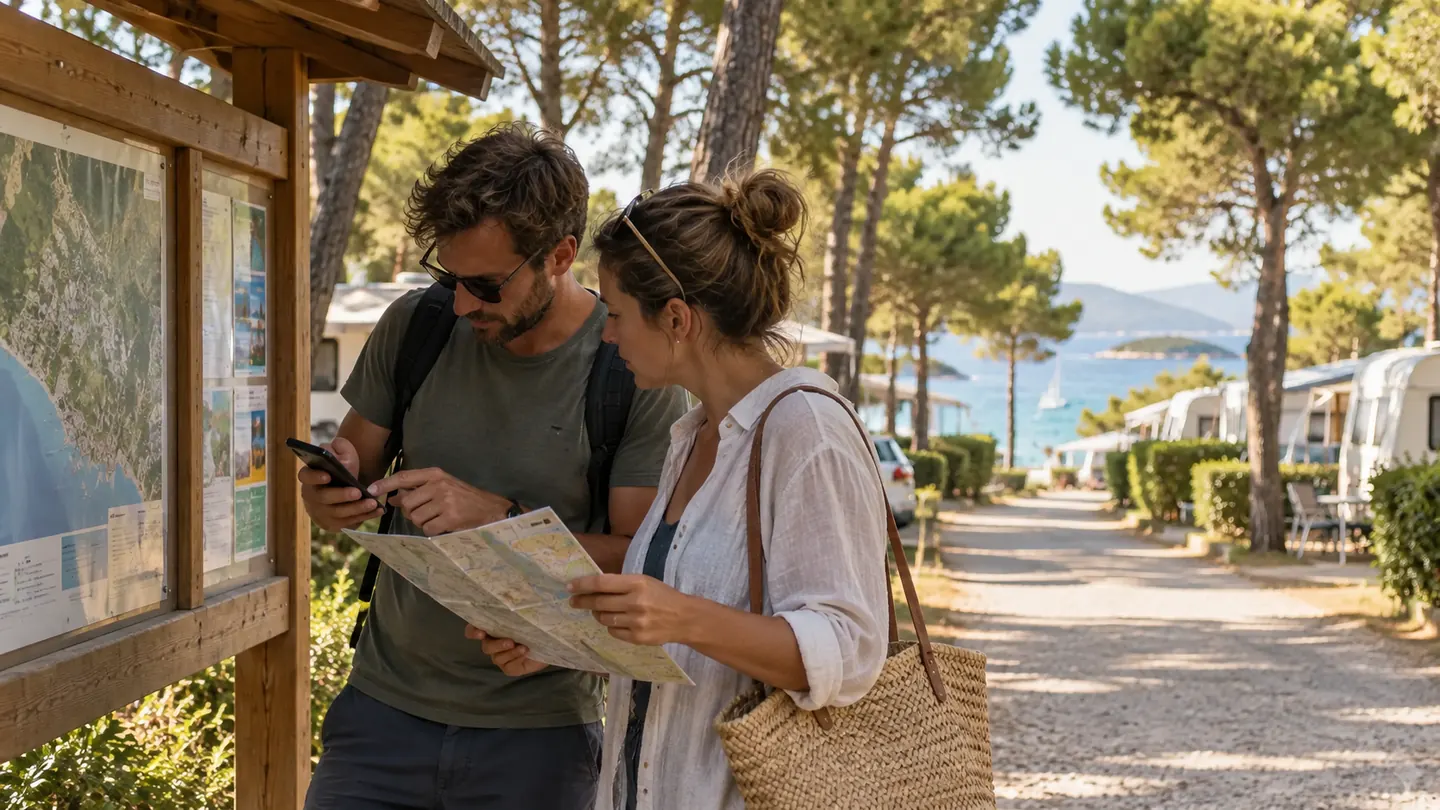
Stop booking blind: why exact-pitch choice changes the campsite booking experience
Exact-pitch or specific-unit booking lets a guest select a particular numbered pitch, mobile home or other accommodation unit rather than only a category. An interactive map gives that choice context by showing location, surroundings and attributes. Campsites can use category-based, exact-unit or hybrid models depending on operational strategy.
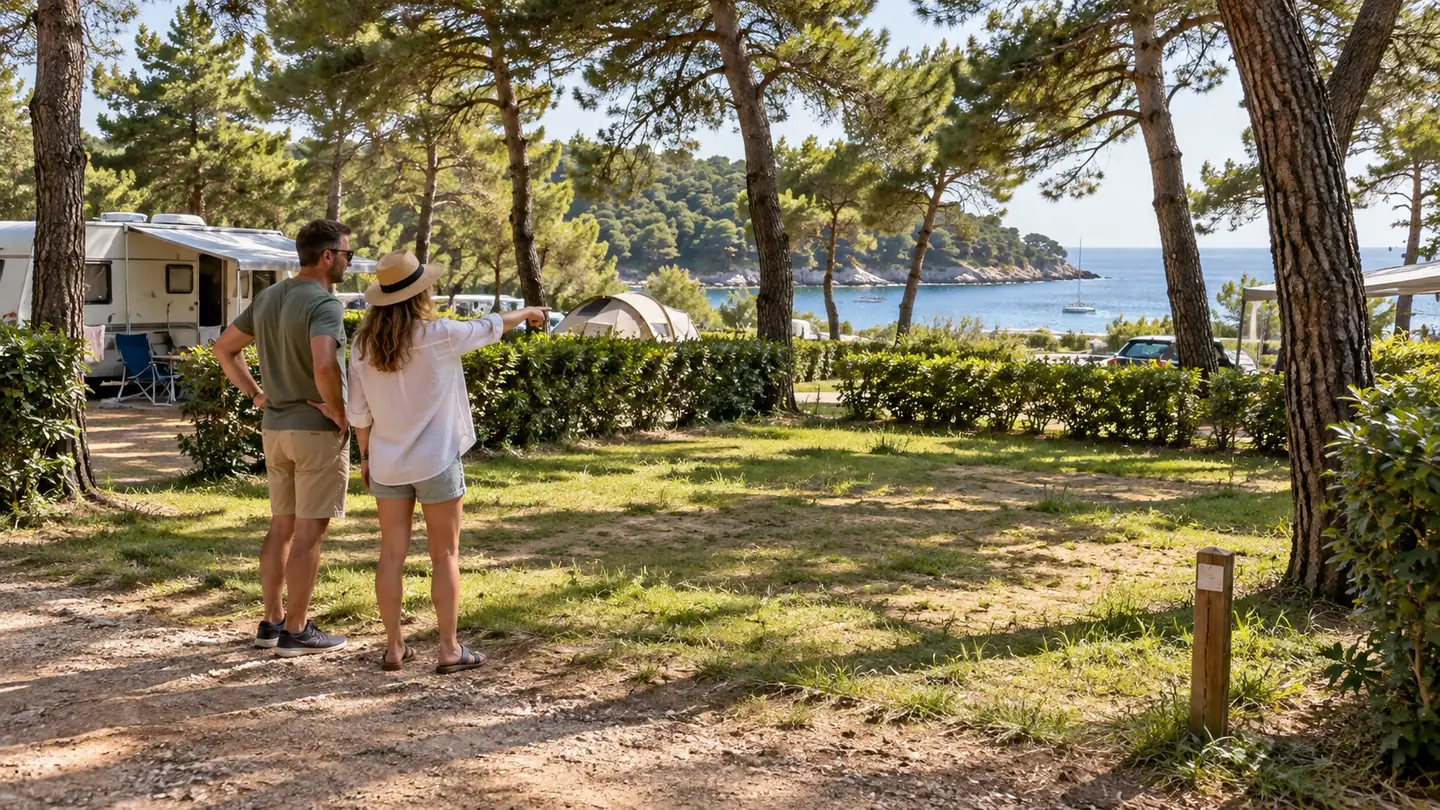
Two pitches can have the same size, the same electricity connection and the same price category, yet one sits beneath mature trees near the sea while the other is closer to the entrance and sanitary facilities. On a spreadsheet, they look similar. To the guest, they are not the same product.
That is why exact-pitch choice is more than a booking feature. It changes what the campsite is actually selling.
A campsite stay has a location inside the location
The destination may be Istria, Cres or the Adriatic coast. The property may be a four-star campsite or holiday resort. But once a guest chooses the property, another location decision begins inside the gate.
Near the sea or further inland? Close to the pool or deliberately away from it? Near friends travelling together? Easy access for a large motorhome? More shade? Quieter corner? Shorter walk to a sanitary block?
For many guests, these are not minor details. They define the stay.
Traditional category booking hides much of that variation. It simplifies inventory management by selling a class of product and assigning the exact unit later. That model is completely valid and often operationally efficient. But it also asks the guest to make a decision with incomplete spatial information.
Exact-unit booking makes space part of the offer
Specific-unit booking changes the sequence. Instead of asking the guest to trust the category and discover the position on arrival, the campsite can let the guest inspect and select an actual unit before completing the reservation.
The interactive map is what makes that choice understandable. A numbered list of units would technically allow specific-unit selection, but it would remove the very thing the guest wants to understand: where the unit is.
On a map, the guest can connect attributes with context. "Near the playground" becomes visible. "Seafront" can be interpreted as an actual position. A 90 m² pitch can be compared with the road, neighbouring units and nearby facilities.
The market already teaches guests to expect this
Exact or preferred-location choice is already visible across outdoor-hospitality software and live campsite booking experiences. Some operators include it as a standard option, while others offer it as an additional paid service. That shows how pitch location can become part of the product rather than information revealed only after booking.
Camp Čikat and Camp Slatina publicly show what this journey can look like in a real Croatian campsite context. Guests can choose dates, inspect exact numbered accommodation units on an interactive map, view photographs and 360° panoramas, see spatial details and continue to booking.
That means the behaviour does not need to be explained from scratch. Guests are already encountering it.
Category booking is not the enemy
The wrong conclusion would be that every campsite should abandon category booking.
There are three sensible models:
1. Category-based booking
The guest chooses a product class, for example a premium pitch or a mobile-home category, while the campsite assigns the exact unit later.
Best when: the operator needs maximum allocation flexibility, categories are highly standardised, or unit-level choice would create unnecessary complexity.
2. Unit-based booking
The guest chooses a specific numbered pitch or accommodation unit.
Best when: location differences are meaningful, the property wants to make spatial choice part of the offer, and the operational systems can reliably support unit-level availability.
3. Hybrid booking
The guest can book a category by default, but exact or preferred-unit selection is available for selected inventory, segments or conditions.
Best when: the operator wants to preserve flexibility while giving guests more control where it adds value.
Technology should support the chosen commercial model. It should not dictate it.
More guest choice does not have to mean less operator control
This is usually the first operational concern: if guests lock exact pitches themselves, can the campsite still manage capacity intelligently?
The answer depends on system design and booking rules. Operators may decide which inventory is selectable, whether specific-unit choice carries a fee, whether some units stay unavailable for manual allocation, and how maintenance or operational blocks are handled. In more advanced implementations, alternative-date logic can also help present another bookable window when a desired unit is not available for the exact dates requested.
Smarter availability logic can add another layer of value when a campsite wants to match guest preferences with sellable inventory more intelligently. Its impact, however, should be evaluated against the property’s own data rather than treated as a universal optimisation promise.
The map should reduce choice, not create a hundred new decisions
An interactive map can also fail by giving the guest too much freedom without enough guidance.
Imagine opening a 900-pitch resort and seeing 900 clickable objects with no meaningful way to narrow them. Technically, the map is interactive. Practically, the guest now has a new job.
The better journey starts with intent. Dates, party composition and accommodation type remove impossible options. Filters can then narrow the field by attributes that matter, such as size, facilities, zone or proximity. Only then should the map invite a detailed spatial comparison.
Good specific-unit booking is therefore not "choose from everything". It is "show me the few realistic options and let me understand the difference".
Exact choice can also make premium differences easier to explain
Many campsites already have differentiated categories based partly on location. The challenge is making the premium understandable before arrival.
A label such as "Premium Mare" may be clear internally but abstract to a first-time guest. A map can show what the premium actually means: first row, shorter distance, a certain orientation, proximity to a facility or another spatial characteristic.
That does not automatically justify a higher price. Pricing remains a commercial decision. But it makes the proposition easier to see.
There is a reception benefit too, but measure it
Specific-unit information can also make conversations at reception more concrete. Instead of explaining "somewhere in Zone B", staff can show options visually and discuss them using the same spatial reference the guest sees.
It is reasonable to expect clearer digital information to reduce some repetitive location questions, but the useful question is not whether a generic percentage exists. The better approach is to measure the actual workflow: location-related contacts before arrival, average handling time for walk-ins, reassignment requests and guest use of the map.
Exact-pitch booking is really confidence architecture
The most useful way to think about this is not "control versus no control". It is confidence.
The operator gains a clearer way to present the differences inside physical inventory. The guest gains a better understanding of what they are committing to. And the map becomes the bridge between the category sold by the booking system and the real place waiting on arrival day.
For outdoor hospitality, where the space around the accommodation is often part of the accommodation, that is a meaningful change.
Sources
- Camp Čikat - Choose and book an exact pitch or accommodation unit
- Camp Slatina - Interactive map and exact-unit booking
- Campspot - FAQ: precise campsite selection / Lock Site
- Booking Experts - Interactive map view and preferred-pitch booking